
What term do psychologists use for a loss like a friendship breakup, which lacks clear finality or acknowledgment?
Select one answer.
Why a friendship breakup hurts so much
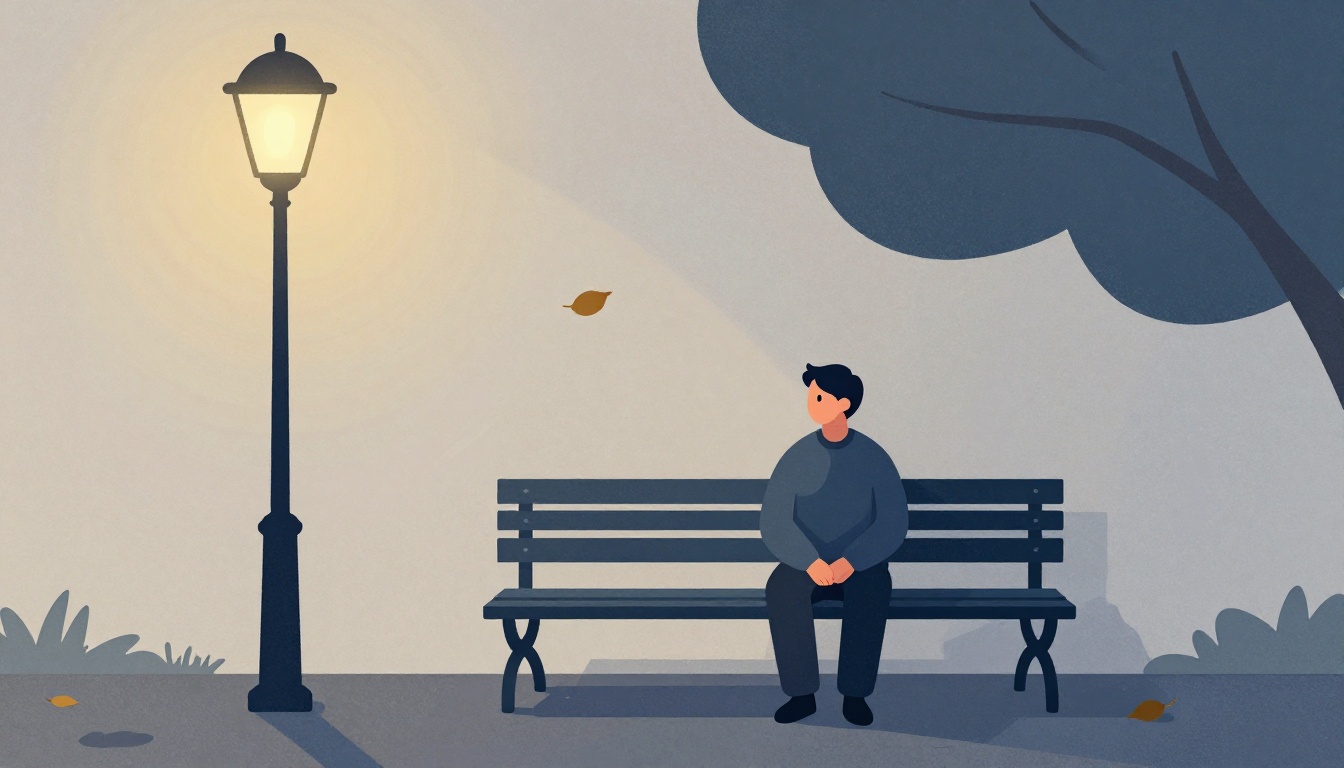
When a close friendship ends, you may feel sadness, confusion, rejection, anger, or shame — and then wonder whether you have any right to feel that way. There was no funeral, no casserole, no sympathy card. Yet the pain is real. Psychologists call this ambiguous loss: a loss without clear finality or social acknowledgment. It can feel just as intense as other grief, but harder to validate (Center for Marriage and Relationships).
Ambiguous loss has two common forms: someone is physically present but psychologically absent, or psychologically present but physically gone. A friendship breakup often fits both. The person is still walking around the world, posting on social media, living a life — but no longer in yours (Center for Modern Relationships).
That lack of closure is what makes it so hard. Humans like the completion of a story to make meaning of difficult feelings. With a death, you know the person is gone from this world. With a friendship breakup, there is no memorial, no ritual, no clear ending — so your brain keeps searching for one.
Name it, then let yourself grieve
The first practical step is to admit it hurts. You are not being overly sensitive; you are being honest. Grieve what you lost: the inside jokes, the shared memories, the safety of being known.
Try this checklist:
- Write it down. List how the friendship ended, how those events made you feel, and the explicit reasons you were angry, hurt, or upset. Writing helps you process and gives your future self a record.
- Feel the negative feelings. Giving yourself permission to feel petty, angry, or disappointed can help you create distance and understand that maybe you do not need this person as much as you thought.
- Write a goodbye letter. You do not have to send it. Expressing what you could not say in person can help you find closure on your own.
- Reflect on gratitude and loss. Write down what you are thankful for and what you will miss. Acknowledging the good times helps you appreciate the relationship without staying stuck in it.
Look at the loss with clear eyes
Once the grief is named, reflect honestly — not obsessively. Ask yourself:
- What changed?
- Were there patterns I ignored?
- Were boundaries crossed or needs unmet?
- Was this friendship still healthy, or had it become one-sided?
Friendships fade for many reasons: life transitions, spiritual growth, misaligned values, or unmet expectations. Not every ending means someone failed. Some friendships were meant for a season, not a lifetime. As a therapist writing for Exploring Therapy puts it, friend breakups can be a sign that we are growing in ways the friendship could not sustain — making room for relationships that better align with who we are now.
Take responsibility, forgive the rest
Every relational rupture has layers. Ask: Did I contribute to the breakdown? Did I avoid difficult conversations? Was I too dependent, too distant, too critical?
Owning your part does not mean taking all the blame. It means living in the light. When you take responsibility for what you can control and release the rest, you step into maturity — and that is where forgiveness begins.
Rebuild your support system
Talking about your feelings can help you process the breakup and start healing. A support system provides comfort and perspective. If you have been leaning on one friend for everything, this is the moment to widen the circle.
- Reach out to other friends, even when it feels awkward.
- Consider a therapist or counselor who understands ambiguous loss.
- Join a group — peer-led or professional — where you do not have to explain why you are sad.
- Be patient with yourself. Healing from ambiguous loss is not linear.
When to seek professional help
If the grief is disrupting your sleep, appetite, work, or ability to function for weeks on end, that is a signal to get support. A therapist can help you contextualize the loss, separate it from other unspoken griefs, and build coping strategies. You do not need a death to deserve care.
How the Featured Expert Can Help
Loss Support Services offers compassionate, remote counseling and workshops for individuals coping with various types of loss, including non-death losses like friendship breakups. The service is small and client-centric, with one-on-one telehealth sessions and supportive workshops, and it emphasizes personal healing and spiritual exploration. You can learn more at Loss Support Services.
Quiz: Test your understanding
Friendship breakups are a form of ambiguous loss — grief without a clear ending or social recognition. Take this quick quiz to check what you have learned.
Question: What term do psychologists use for a loss like a friendship breakup, which lacks clear finality or acknowledgment?
- A) Complicated grief
- B) Ambiguous loss
- C) Anticipatory grief
Correct answer: B) Ambiguous loss